Basement Flood Cleanup Denver
Denver basements flood from three main sources, and the source sets the cleanup category. Clean-water flooding (Category 1) comes from a failed supply line, a burst water heater, or a cracked foundation seep along…
Denver basements flood from three main sources, and the source sets the cleanup category. Clean-water flooding (Category 1) comes from a failed supply line, a burst water heater, or a cracked foundation seep along…
Denver basements flood from three main sources, and the source sets the cleanup category. Clean-water flooding (Category 1) comes from a failed supply line, a burst water heater, or a cracked foundation seep along Denver's expansive Pierre shale clay soils. Gray-water flooding (Category 2) usually traces to a washing-machine overflow or a sump-pump failure during a heavy South Platte-corridor storm. Black-water flooding (Category 3) is sewage backup through a floor drain, common in older Wash Park, Baker, and Highlands homes with clay sewer laterals that intruding tree roots crack. The IICRC S500 standard requires all porous materials touched by Category 3 water to be removed, so sewage jobs cost more and take longer than a clean-water pump-out.
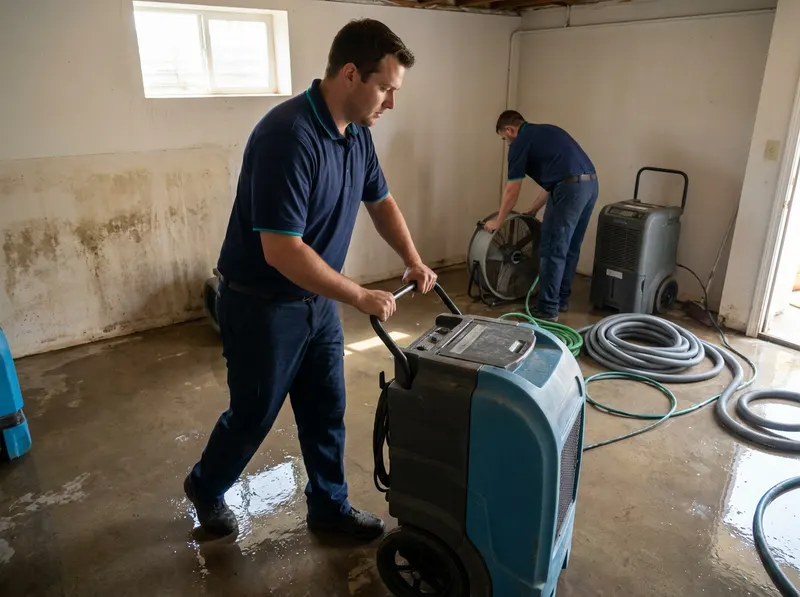
The work runs in a fixed order. First, truck-mounted or portable pumps extract standing water, a submersible pump moves roughly 30-60 gallons per minute. Second, soaked carpet pad, baseboards, and the flood cut (the bottom 12-24 inches of drywall) come out, because gypsum wicks water upward and holds it. Third, an antimicrobial is applied to exposed framing and slab. Fourth, air movers and LGR dehumidifiers run until wood framing reads at or below 16% moisture content on a pin meter, the documented dry standard restorers use before rebuild. In Denver's dry summer air a finished basement often dries in 3 days; a below-grade room in a Green Mountain or Ken Caryl home with poured concrete walls can take 5.
Drying-only versus tear-out is the practical decision. If the water was clean and reached the basement within the last 24-48 hours, sealed concrete and solid-wood trim can often be dried in place and saved. If the water sat longer, was gray or black, or soaked drywall and carpet pad, those porous materials are removed rather than dried, the trade-off is a bigger rebuild against the mold risk of trapping moisture behind a wall. Denver's average summer relative humidity near 34% helps dry-in-place cases, but slab-on-grade seepage that keeps recharging cannot be dried until the exterior grading or sump issue is fixed.
At intake, crews document water depth, category, and affected square footage with meter readings, records most insurers require for a claim. Sump-pump failures and sewer backups are common exclusions on standard Denver homeowner policies unless a rider was added, so confirming coverage before authorizing tear-out prevents a surprise bill.
Every job gets a firm, written price after a free on-site visit.
Tell us about your basement flood cleanup job in Denver and we'll send a clear, written quote, usually the same day.