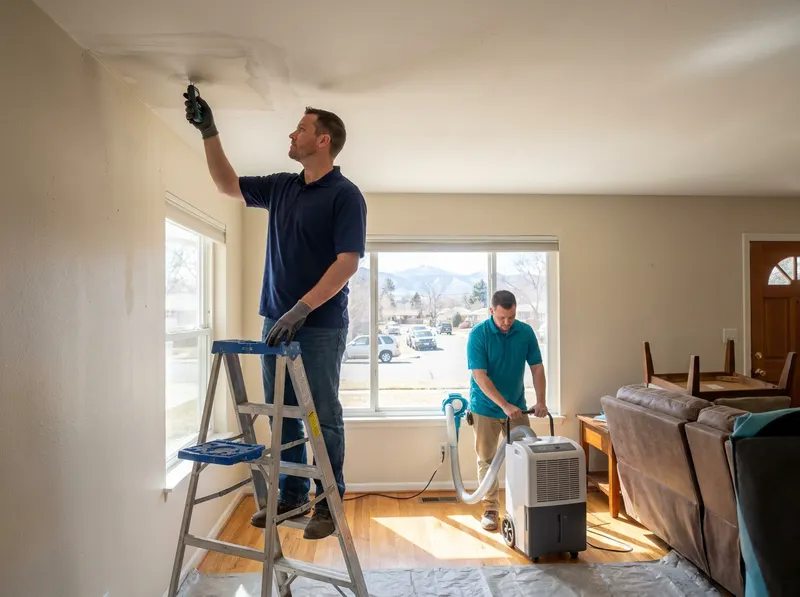
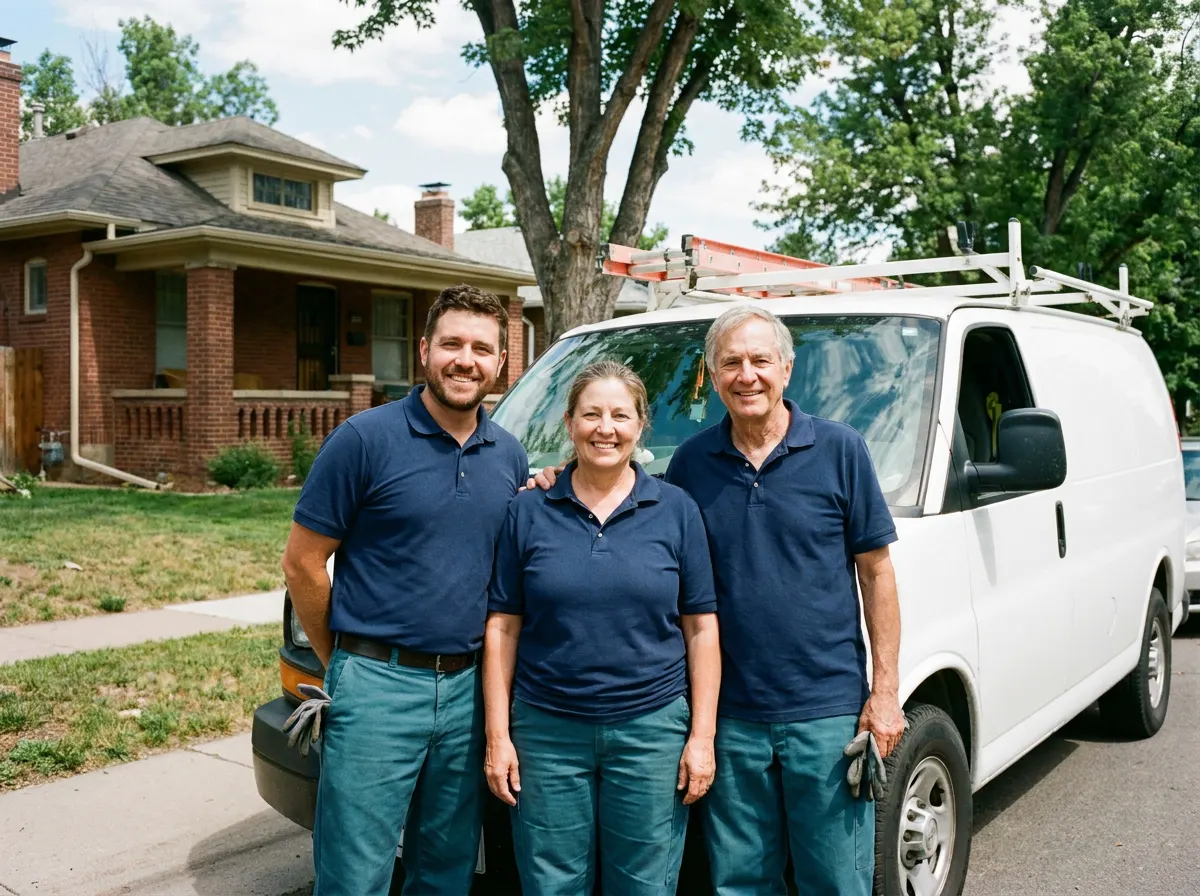
How fast can a crew respond to a water emergency in Denver?
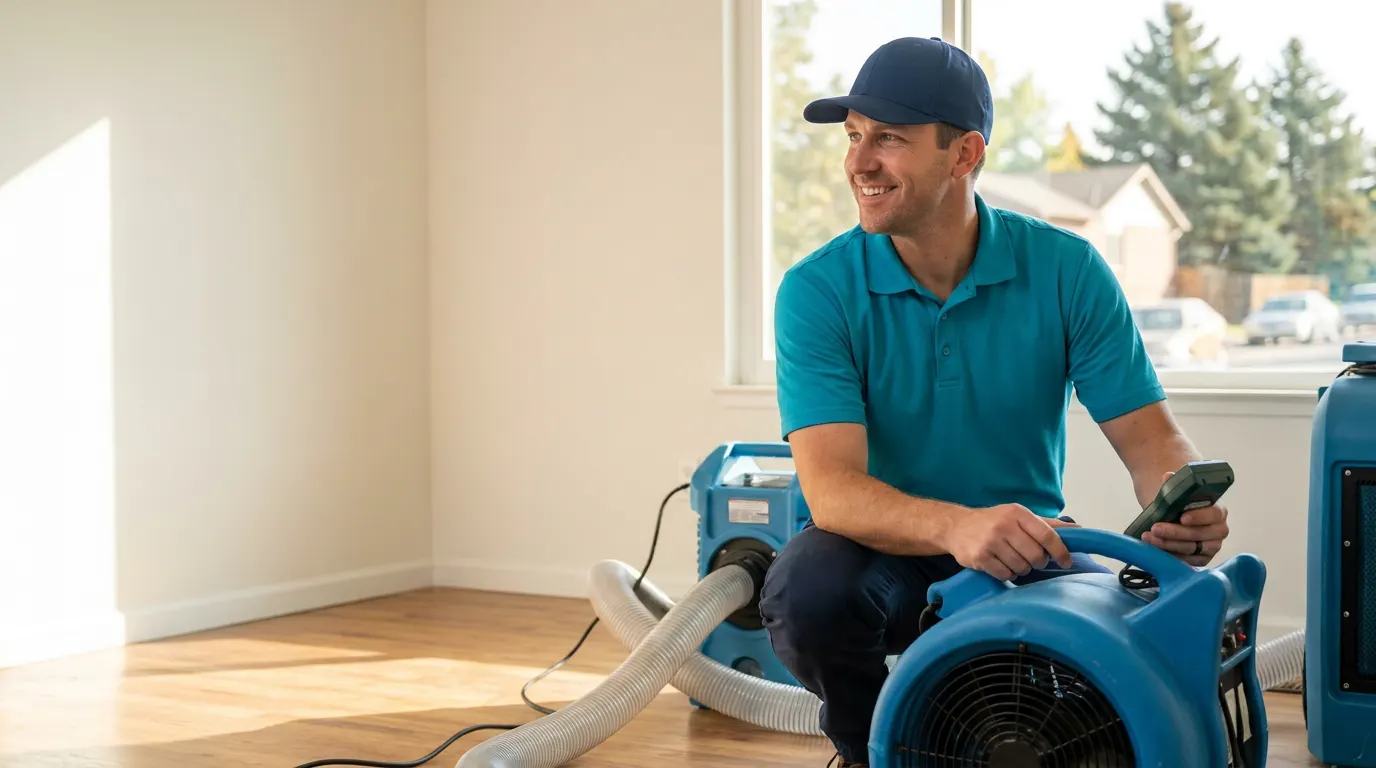
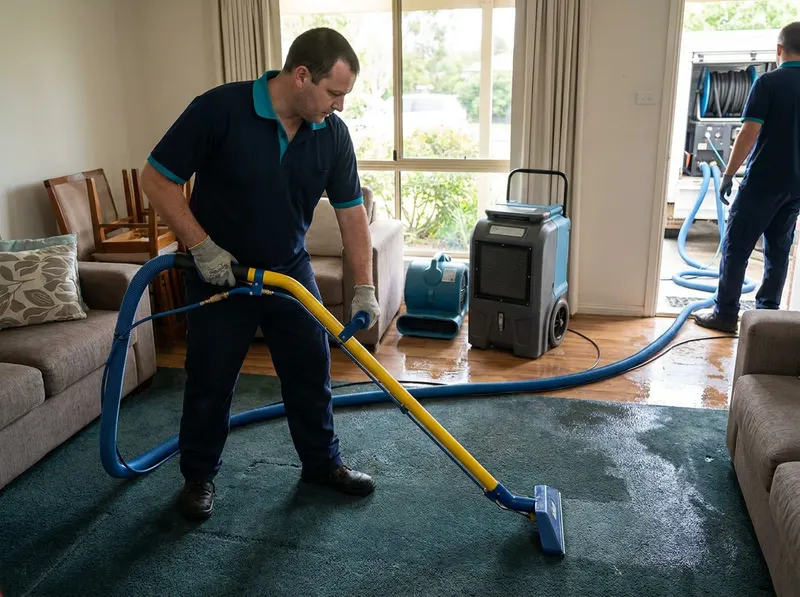
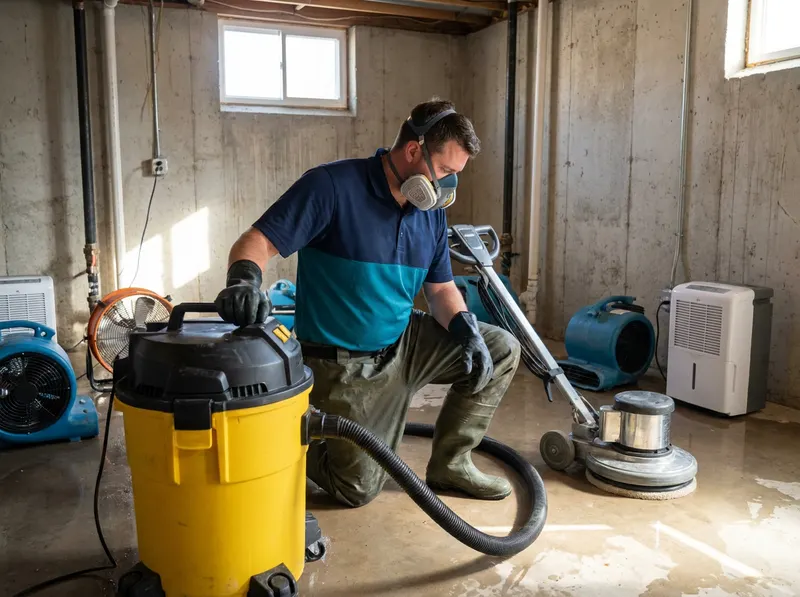
Emergency water extraction is available 24/7 across Denver and the Front Range, with crews dispatched around the clock for flooding, burst pipes, and sewage backups. Responding within the first hour matters because clean water becomes contaminated and mold begins growing within 24 to 48 hours of a loss.
How much does water damage restoration cost in Denver?
Water damage restoration in Denver typically runs $1,200 to $3,000 for a single flooded room, $2,500 to $8,000 for a basement, and $8,000 or more for whole-home or multi-level losses. The quoted price does not include the rebuild after drying unless stated, so the real total for finished spaces includes drywall, paint, and flooring; an exact figure is confirmed by a free on-site moisture assessment.
Does insurance cover water damage restoration in Denver?
Most Denver homeowner policies cover sudden and accidental water damage, such as a burst pipe or an appliance line failure, while gradual leaks and surface groundwater are often excluded. The restoration crew documents moisture readings, photos, and a room-by-room scope so the claim carries a defensible loss record for the adjuster. Sewer backup coverage is often a separate rider, so checking the policy for that endorsement matters before a category 3 loss.
What is the difference between water extraction and mold remediation in Denver?
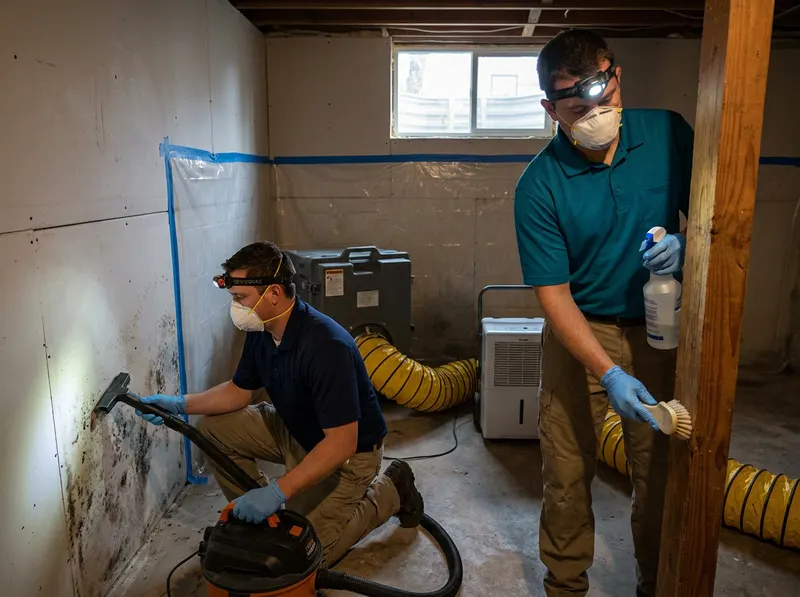
Water extraction and structural drying remove water and dry the building before mold can establish, and are the goal within the first 48 hours of a Denver water loss. Mold remediation is needed when water sat longer or the material is already colonized, and it adds containment, removal of contaminated porous material, and antimicrobial treatment on top of drying.
Why do Denver basements flood so often?
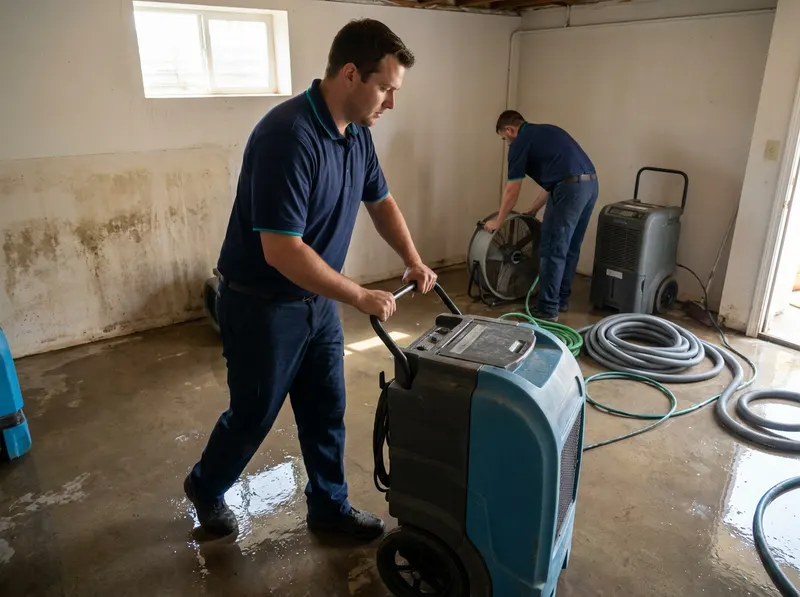
Denver basements flood most from failed sump pumps, sewer line backups during heavy summer runoff, and foundation seepage in older neighborhoods like Baker and Sloan's Lake that sit low during spring snowmelt. Winter freeze-thaw cycles also burst supply lines in exterior walls and crawl spaces, releasing water for hours before it is discovered in an unoccupied basement.
How long does it take to dry out a water-damaged home in Denver?
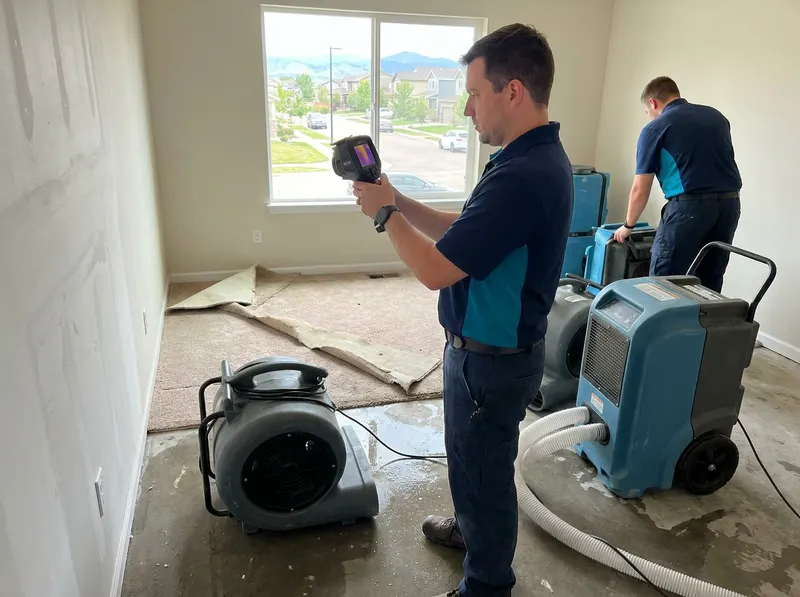
A clean-water single-room loss in Denver usually dries in 3 to 5 days with air movers and a dehumidifier running continuously, while a flooded basement or multi-room loss can take 5 to 10 days. Denver's low ambient humidity generally shortens drying compared with humid climates, but hidden water behind plaster and lath in older homes can extend the timeline, which is why daily moisture readings are logged until the material meets a dry standard.
Can wet carpet and drywall be saved after a water loss in Denver?
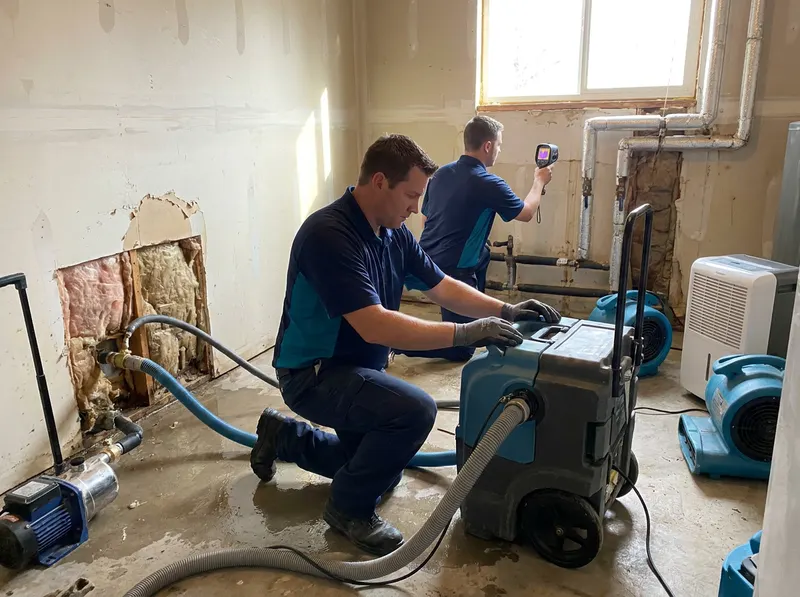
Carpet and drywall from a clean-water loss caught within the first day can often be dried in place and saved in Denver, while the carpet pad usually cannot and is removed. Materials touched by category 3 sewage or groundwater are removed regardless of how they look, because the contamination cannot be dried out. Drywall that stayed saturated for more than a couple of days is typically cut back and replaced rather than dried.
What should I do first when I find water damage in my Denver home?
Shut off the water source or main valve, cut power to the affected area if it is safe to do so, and move valuables off wet floors before a crew arrives in Denver. Fast documentation with photos helps the insurance claim, and calling for extraction quickly limits how far water wicks into drywall and subfloor. Avoid running the HVAC if the loss involves sewage or suspected mold, since that can spread contaminants through the ductwork.
Do you handle both residential and commercial water damage in Denver?
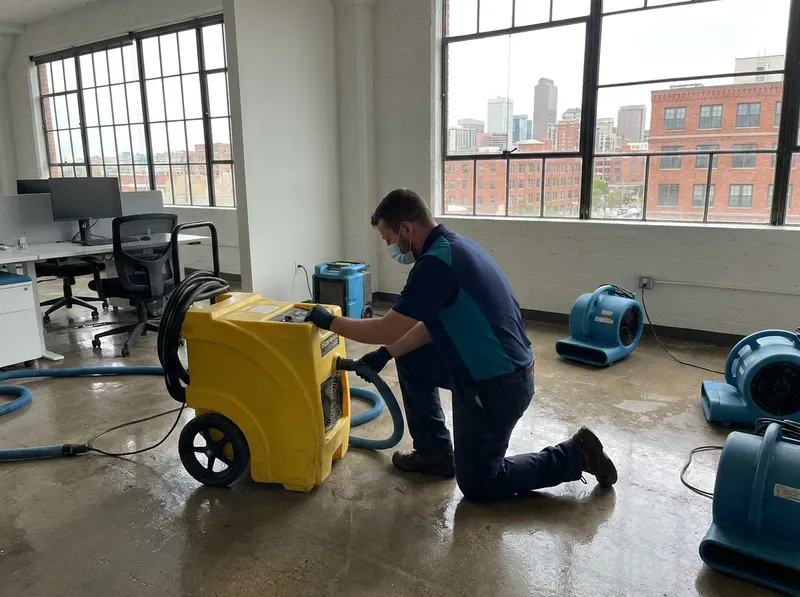
Water damage restoration in Denver is provided for both homes and commercial properties, including offices, retail spaces, and multi-unit buildings in LoDo, RiNo, and the Denver Tech Center. Commercial work is staged around business hours where possible, uses desiccant dehumidifiers for large open floor plates, and includes moisture logs for property managers and adjusters.
Is mold always a concern after water damage in Denver?
Mold is a concern whenever wet material sits longer than 24 to 48 hours or when the loss involves category 3 water, since spores colonize damp drywall and framing quickly. Denver's dry climate slows surface mold in well-ventilated spaces, but enclosed wall cavities, crawl spaces, and basements hold moisture long enough for growth, which is why thermal imaging and moisture meters are used to confirm the structure is fully dry before rebuild.
How is the price for water damage restoration in Denver determined?
The price for water damage restoration in Denver depends on the water category, the square footage affected, how many materials must be removed versus dried in place, and how long the water sat before extraction. A category 1 room dried in place is far cheaper than a category 3 basement that needs tear-out and antimicrobial treatment. A free on-site moisture assessment produces the room-by-room scope and the actual figure, since surface appearance rarely reflects the full extent of hidden water.